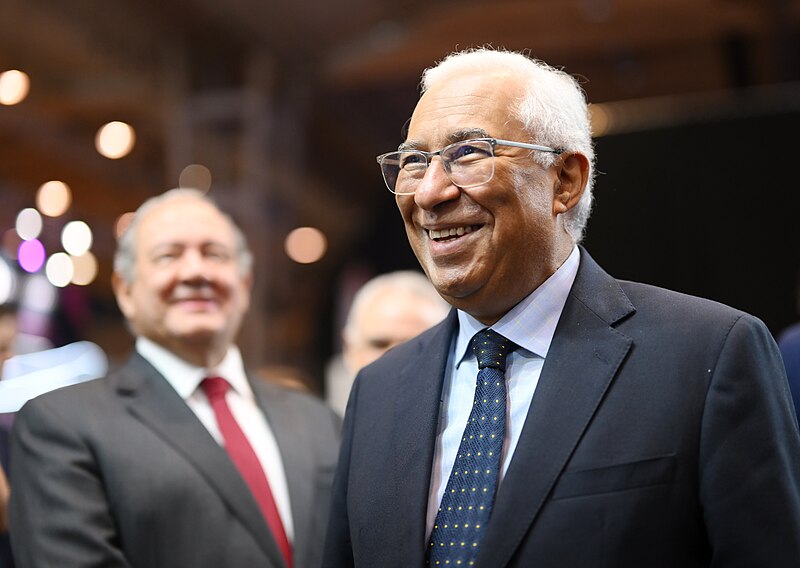
2 November 2022; Antonio Costa, Prime Minister, Government of Portugal during day one of Web Summit 2022 at the Altice Arena in Lisbon, Portugal. Photo by Stephen McCarthy/Web Summit via Sportsfile https://flickr.com/photos/74711243@N06/52472414338
Corruption has no long-term benefits. Even the most powerful authority figure suffers the consequences. António Costa, the prime minister of Portugal, has been in office for eight years. Costa has resigned after being investigated for corruption in handling lithium mining and hydrogen projects. The police had conducted a search on his home, hoping to find any potential evidence that would link Costa back to the case. Police were also searching several other addresses within the area, including the environment and infrastructure ministries. Costa made it clear in his final statement to the press that this was the best decision for the country. He felt as if his resignation was the only way to avoid any more negative media attention.
It is only a matter of time before a new prime minister is elected for the position. Before Costa was investigated for corruption, he had won a third consecutive term as prime minister once his party captured a majority in the snap election of January 2022. Even though Costa could stay in office for the remainder of his term, he chose integrity over pride. This resignation also signifies Costa’s last term in office, as he will not run in future elections. The allegations put against Costa in the investigation mainly stated that he had misused funds and engaged in influence peddling with the lithium mining concessions in the northern areas of Portugal.
After Costa chose to leave his position out of dignity, the real mystery becomes what his resignation will mean for the future of the country and the Socialist Party. This corruption probe and the arrest of his associates could damage the party’s reputation for years to come. Now that Costa is out of office, the Portuguese President, Marcelo Rebelo de Sousa, can dissolve the parliament and call for snap elections. The other option is just to appoint a new socialist party member. The first course of action by the president makes it difficult for the socialist party to gain any advantage in future elections.
The misuse of funding for lithium mining is also a concern not just for the country but the European Union (EU) as well. The EU is putting a lot of money into clean energy projects. The EU envisions a world relying more on renewable energy than fossil fuels. If those in power are misusing any Euros for clean energy projects, it could prohibit the EU from funding any country’s project. This action would not be a step forward in international cooperation but rather a step back into political instability.
For more information about Costa’s resignation, check out the video and the article below.
 International Affairs by Jack Peeples
Leave a comment